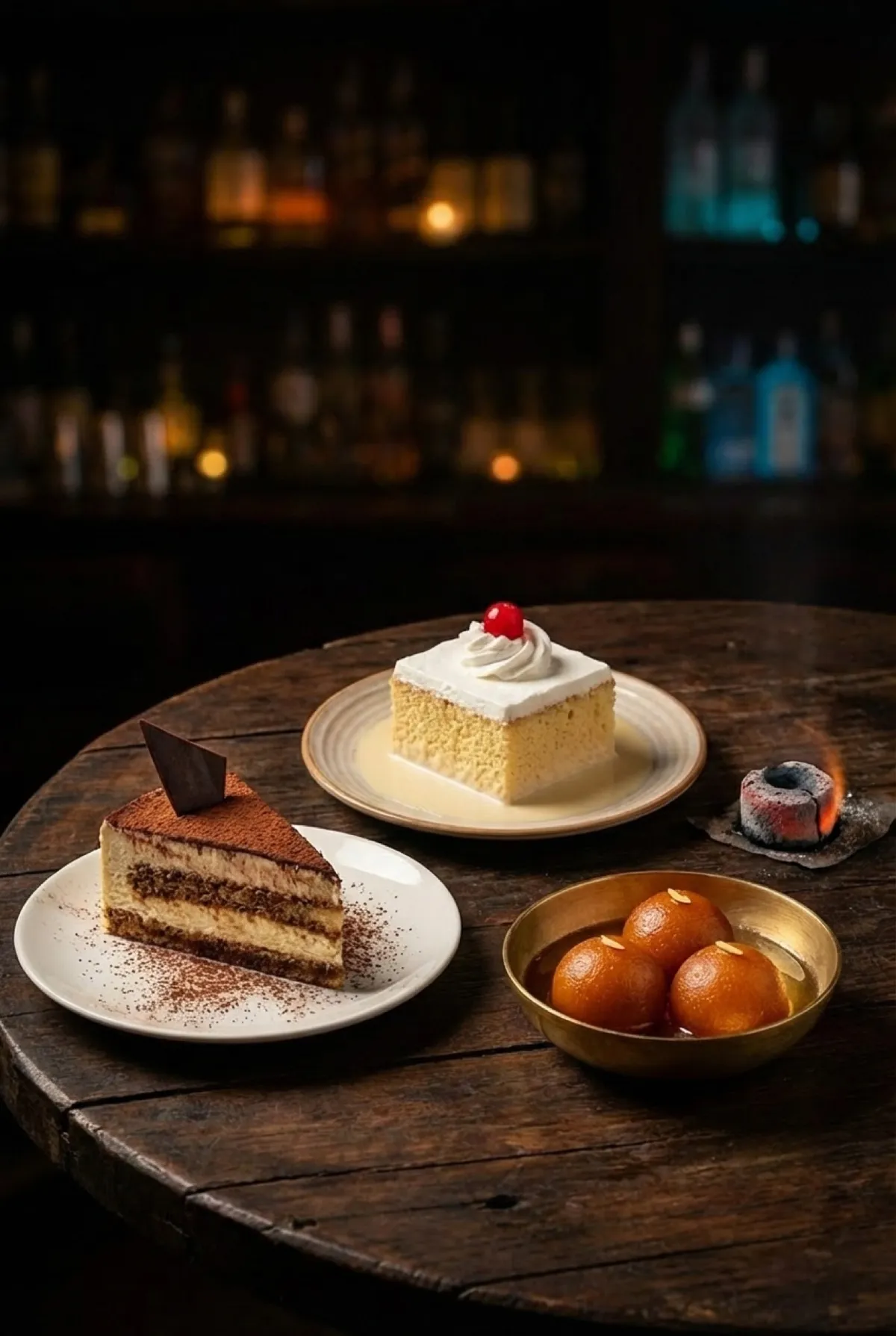
What are the best desserts at Charcoal N Chill?
Our dessert menu features global favorites like Gulab Jamun Cheesecake, Molten Lava Cake, and Baklava, offering a perfect sweet finish to your meal.
Okay, let's talk about our dessert menu for a second.
You've probably noticed something... unusual. Most Indian restaurants stick to Indian desserts. Most places with a Versace-couch-hookah-lounge vibe might throw a chocolate lava cake on the menu and call it a day. We could've done that. We could've played it safe.
Instead, we looked at our dessert menu and said, "What if we just... picked the three greatest desserts from three completely different continents and put them all on the same menu?"
And before you ask—no, we weren't high when we made this decision. (We save that for the customers. Kidding.)
Here's the thing: our dessert menu might look random at first glance. Italian Tiramisu. Mexican Tres Leches. Indian Gulab Jamun. But stick with me, because there's actually a method to this madness. These three desserts? They have more in common than you'd think. And together, they tell one hell of a story.
Let's break it down.
Tiramisu: The Italian "Pick-Me-Up" with a Scandalous Past
We're starting with Italy. Because of course we are.
Tiramisu is one of those desserts that everyone knows. Layers of espresso-soaked ladyfingers, mascarpone cream, and a dusting of cocoa powder. It's elegant. It's sophisticated. It's been on every Italian restaurant menu since the 1980s.
But here's what most people don't know: Tiramisu is barely older than your parents.
Seriously. This dessert that feels like it's been around forever? It was only invented in the late 1960s or early 1970s in Treviso, Italy. There's a restaurant called Le Beccherie that takes credit for creating it in 1969. The name literally means "pick me up" in Italian—which makes sense because the dessert is loaded with espresso and sugar. It's basically an edible energy drink.
Now, here's where it gets interesting.
There's a whole other origin story that claims Tiramisu was invented in the 1800s... in a brothel. Yep, you read that right. According to legend, a clever madam in Treviso created this rich, caffeinated dessert to "reinvigorate" her customers at the end of the evening so they could go home and, uh, handle their marital duties.
Natural Viagra from the 19th century. Served in a brothel. I can't make this stuff up.
(Food historians debate whether this story is true, but honestly? It's too good not to share.)
The modern version—the one we serve—is the 1960s recipe from Le Beccherie. It didn't even make it to America until the 1980s, when it exploded in popularity and became the go-to Italian dessert at every restaurant from New York to Los Angeles.
Why it's perfect for a hookah lounge: Because it's light, it's caffeinated, and it pairs beautifully with a smooth hookah session. The coffee flavor complements mint or fruity blends, and the creamy mascarpone balances everything out. Plus, there's something deeply satisfying about eating an Italian dessert while sitting on a Versace couch. It just feels right.
Tres Leches: The Latin American Cake with a British Twist
Alright, let's head across the Atlantic.
Tres Leches—literally "three milks"—is one of those desserts that looks deceptively simple but is actually pure genius. It's a sponge cake soaked in a mixture of evaporated milk, condensed milk, and heavy cream (or whole milk), then topped with whipped cream. The result? A cake that's somehow both light and ridiculously rich at the same time.
Most people assume Tres Leches is a centuries-old Latin American tradition. It's not.
The modern version of this cake didn't even show up in cookbooks until the 1960s or 70s. And here's the kicker: the technique of soaking cake in liquid? That's British.
Yeah, you read that right. British.
See, back in medieval England, people would soak stale cake in liquid (milk, cream, booze—whatever was around) to repurpose it and avoid waste. This tradition spread across Europe and eventually made its way to Latin America during colonization.
Fast forward to the 1800s and early 1900s, when companies like Nestlé and Borden started mass-producing canned milk. They opened factories in Central America—first in Mexico, then in Nicaragua—and started printing recipes on the cans to promote their products. One of those recipes? You guessed it: Tres Leches.
By the 1930s and 40s, the cake was everywhere in Mexico and Nicaragua. And by the 1980s, it hit Miami (thanks to Nicaraguan immigration) and spread like wildfire across the US.
Fun fact: There's even a version of Tres Leches in Albania and Turkey called "trileçe." Apparently, Mexican soap operas were so popular in Albania that local chefs reverse-engineered the dessert from TV and it became a hit. Food really does bring the world together.
Why it works here: Because it's indulgent without being heavy. The sponge cake soaks up all that milky goodness but somehow stays light and airy. It's perfect after a meal or as a late-night treat when you've been vibing with friends for hours. Plus, it's just fun. Nobody orders Tres Leches and regrets it.
Gulab Jamun: The Indian Dessert with Persian Roots
Now we're heading east. All the way to India—or, more accurately, to Persia first, then India.
Gulab Jamun is the dessert that non-Indian people try for the first time and immediately go, "Wait, why have I never had this before?"
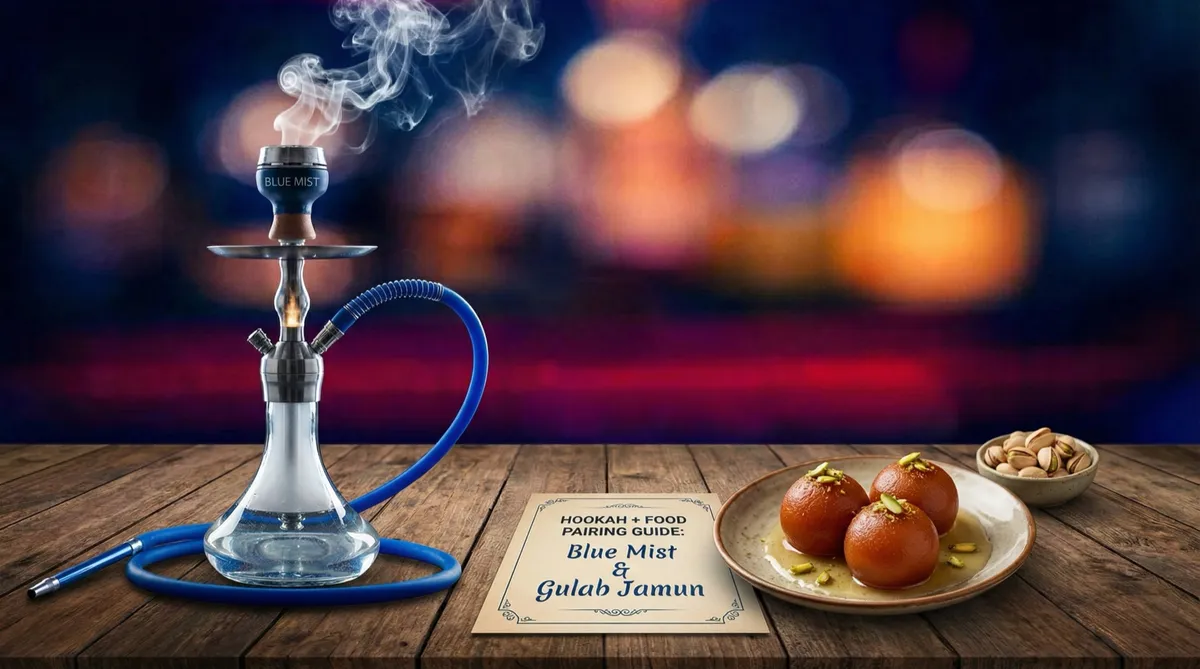
Picture this: soft, spongy balls made from milk solids (khoya), fried until golden, and then soaked in a warm sugar syrup flavored with rose water and cardamom. They're served warm, they're insanely sweet, and they basically melt in your mouth.
The name "Gulab Jamun" comes from two words: "Gulab" (Persian for "rose water") and "Jamun" (a small Indian fruit that the dessert resembles in size and shape). The Persian influence is no accident—this dessert came to India during the Mughal Empire, when Persian invaders brought their culinary traditions with them.
The Persians had a dessert called luqmat al-qadi (literally "the judge's morsel")—fried dough balls soaked in rose water syrup. When the Mughals brought this recipe to India, local cooks adapted it by using khoya (reduced milk solids) instead of plain dough. The result was richer, creamier, and more indulgent than the original.
Legend has it that Shah Jahan's royal chef (yes, the guy who built the Taj Mahal) accidentally created Gulab Jamun while experimenting in the kitchen. Whether that's true or not, the dessert became a staple in Mughal courts and eventually spread to sweet shops and homes across India.
Here's what makes Gulab Jamun special: It's deceptively simple. Just fried dough balls and syrup. But when it's done right—when the balls are perfectly soft, the syrup is the right temperature, and the rose water is subtle but present—it's transcendent. It's the dessert that turns people into believers.
Why it's perfect for us: Because it's warm, it's sweet, and it's a perfect ending to a meal. It also pairs surprisingly well with chai or coffee if you're not ready to call it a night. And honestly? It's a conversation starter. Half our customers have never tried Gulab Jamun before, and watching their faces light up on that first bite never gets old.
The Charcoal N Chill Dessert Theory: Why These Three Work Together
Okay, so we've got Tiramisu from Italy, Tres Leches from Latin America, and Gulab Jamun from India (via Persia). On paper, these three desserts have nothing in common. Different continents. Different ingredients. Different techniques.
But here's the genius of it:
1. They all have fascinating, cross-cultural origins.
Tiramisu may be Italian, but it's got espresso from Africa and mascarpone from recent Italian dairy innovation. Tres Leches is Latin American, but the technique is British and the recipe was popularized by an American corporation. Gulab Jamun is Indian, but it's rooted in Persian culinary traditions. These desserts are all fusions in their own right.
2. They all involve some form of soaking or saturation.
Tiramisu? Espresso-soaked ladyfingers. Tres Leches? Milk-soaked sponge cake. Gulab Jamun? Syrup-soaked fried dough. There's something about letting a dessert absorb liquid that makes it next-level delicious. It's a shared technique across three completely different cuisines.
3. They're all celebration desserts.
Tiramisu is what you order on a special night out. Tres Leches is the cake at every Latin American birthday party and quinceañera. Gulab Jamun is served at Indian weddings, festivals, and any occasion that calls for something sweet. These aren't everyday desserts—they're occasion desserts. And a night at Charcoal N Chill? That's an occasion.
4. They each match a different vibe.
- Tiramisu is for the sophisticated, coffee-loving, "I'm here for the ambiance" crowd.
- Tres Leches is for the "I want something sweet and fun" people who aren't afraid of a little indulgence.
- Gulab Jamun is for the adventurous eaters who want to try something they've never had before (or for the regulars who know exactly how good it is and order it every single time).
Together, these three desserts cover every possible mood, preference, and personality type that walks through our doors.
Which One Are You?
Still not sure which dessert to order? Let me help:
Order Tiramisu if:
You're a coffee person. You appreciate the finer things. You've been smoking a mint or citrus hookah and want something that complements the vibe without overwhelming your palate.
Order Tres Leches if:
You're in the mood for something sweet, comforting, and just a little indulgent. You want a dessert that feels like a hug. Bonus points if you're celebrating something tonight.
Order Gulab Jamun if:
You're feeling adventurous. You want to try something new (or you already know it's amazing and you're here for round two). You like your desserts warm, syrupy, and unapologetically sweet.
Can't decide?
Get all three and share them with the table. We won't judge. In fact, we encourage it.
The Real Talk
Look, we could've gone the easy route and just thrown some baklava or kheer on the menu and called it a day. But where's the fun in that?
Our dessert menu is a love letter to three completely different culinary traditions—each with its own wild history, each with its own moment of genius, each with its own reason for existing. And somehow, they all work together.
Because at the end of the day, good food is good food. It doesn't matter if it came from Treviso, Managua, or Delhi. If it's delicious, it belongs on the menu.
So yeah, we took desserts from three continents and put them on the same menu at a hookah lounge in Alpharetta, Georgia. And you know what? It works.
Ready to End Your Night on a Sweet Note?
BOOK YOUR TABLE | VIEW FULL MENU | SEE UPCOMING EVENTS
P.S. If you order all three desserts in one night, you're officially a Charcoal N Chill legend. We might even give you a round of applause. 🍰🎂🍩